
Carpet and upholstery cleaning that recovers what is there.
Hot water extraction for office carpets, boardrooms, communal areas and upholstery. Most of what looks like a replacement job is a cleaning job that has been left too long.
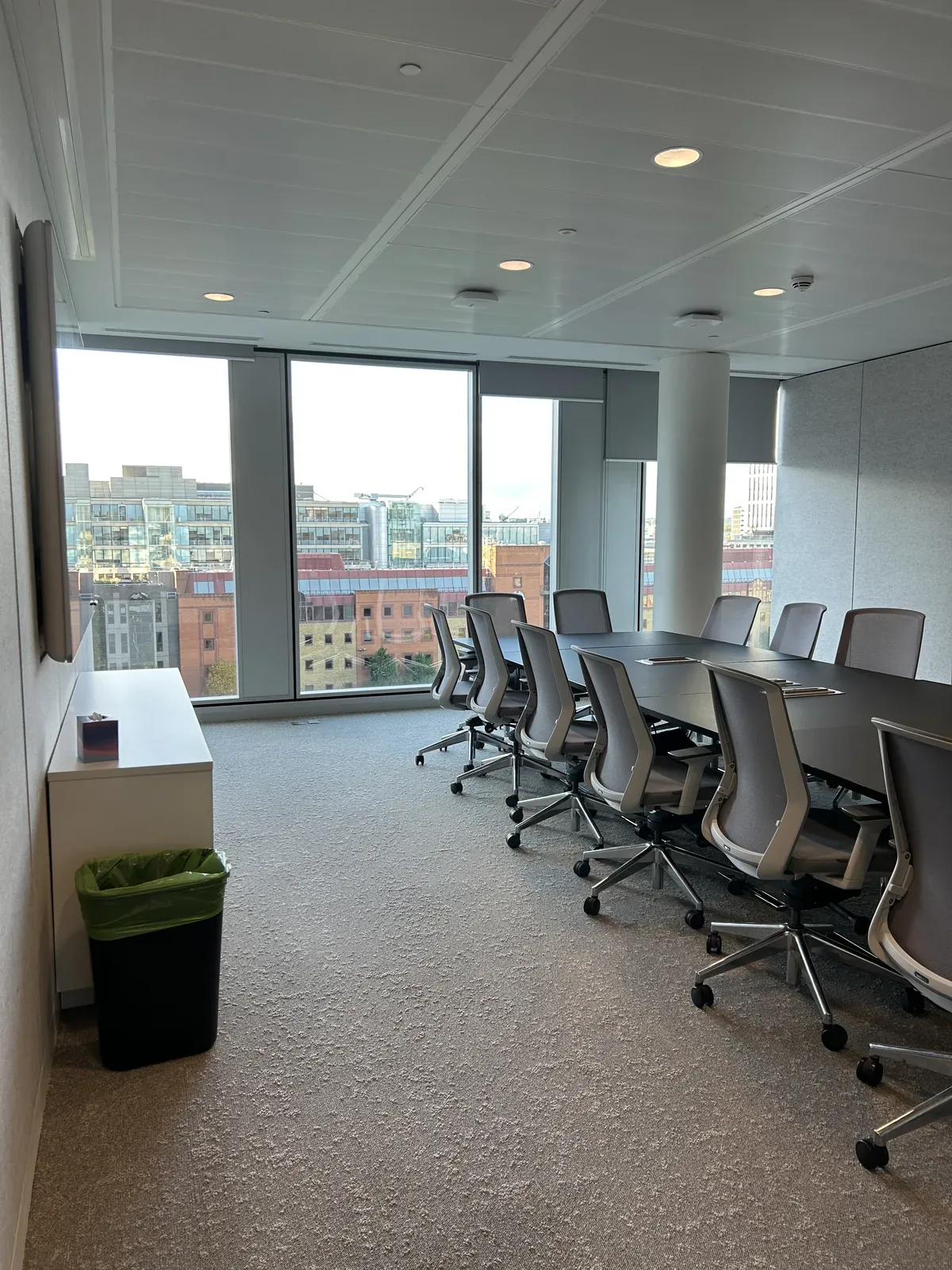
The cheapest floor you will ever lay is the one already down.
Office carpet is usually replaced because it looks finished, not because it is. Soil sits at the base of the pile where a vacuum cannot reach it, and every footstep grinds it further in.
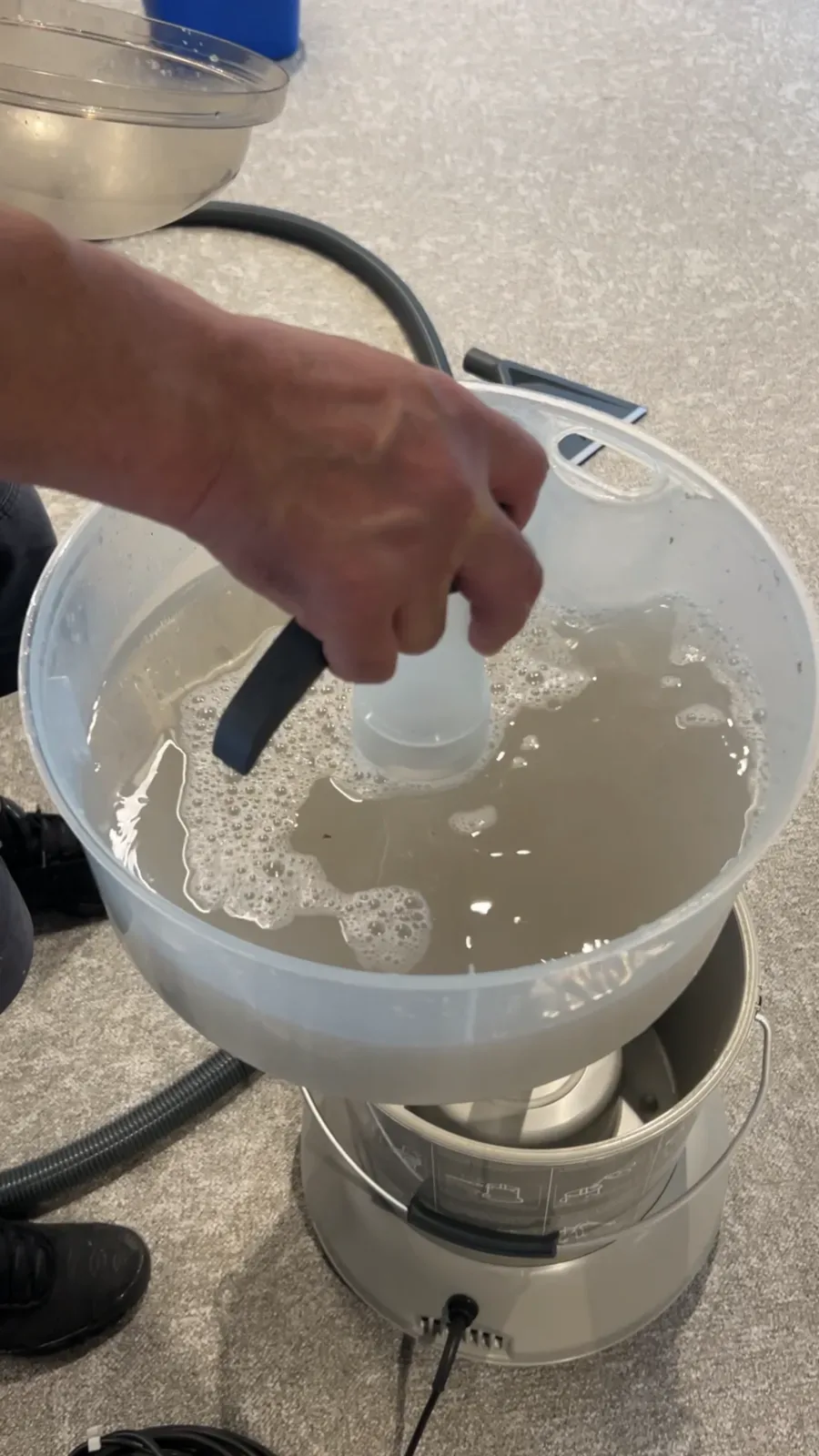
Extraction pulls that soil out rather than moving it around the surface. The difference is not a matter of opinion — it is in the tank afterwards.
- Recarpeting a floor
- Multiples of the cost, plus moving everyone out for a week
- Extraction on a schedule
- A planned line in a contract, done out of hours
Four things, done properly.
Office carpet and carpet tiles
Open-plan floors, meeting rooms and boardrooms, by hot water extraction. Out of hours where the space cannot be taken offline in the working day.
Communal areas and stairwells
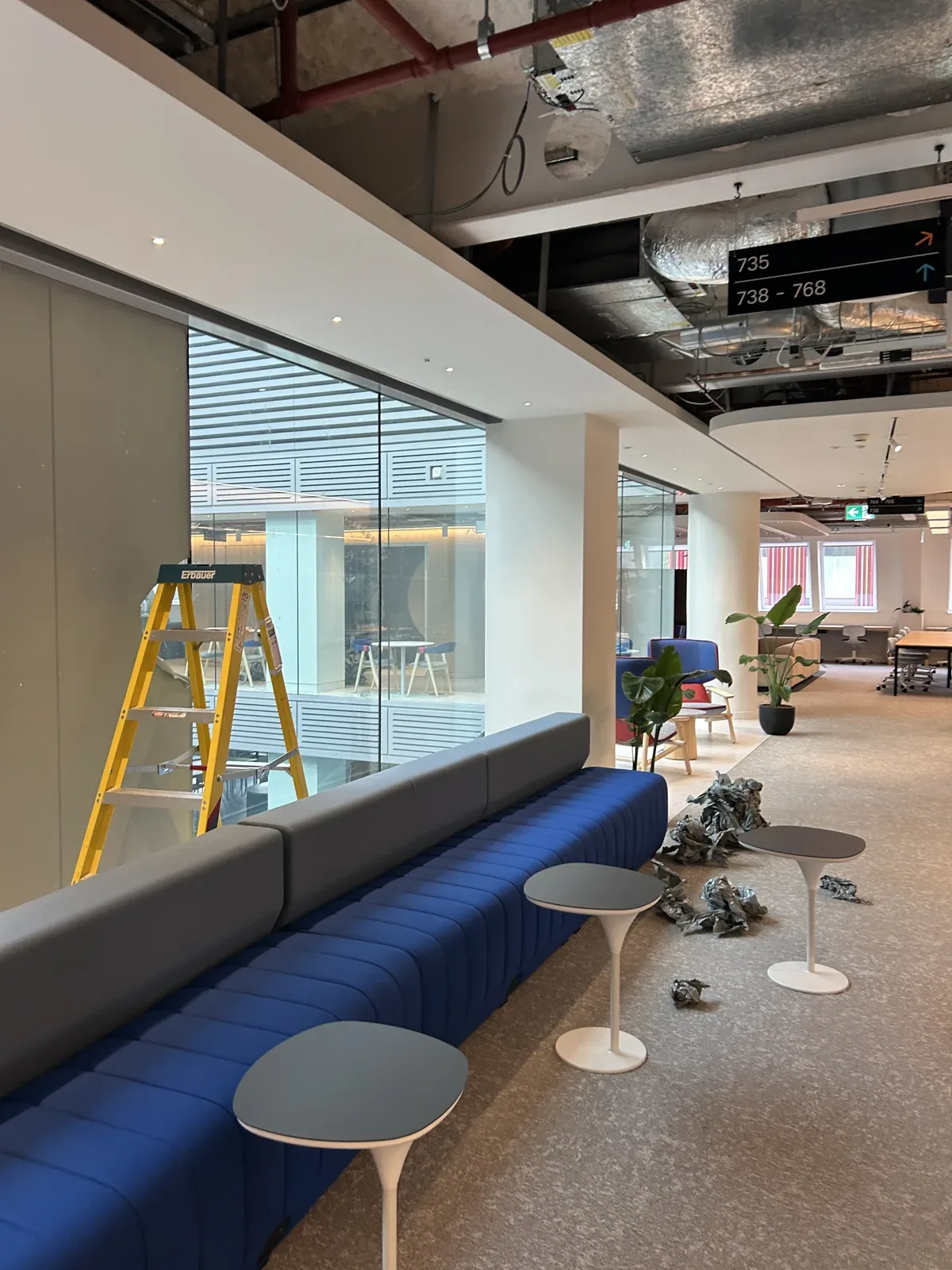
The parts of a building residents judge it by, and the parts that take the most traffic per square metre of anywhere on site.
Upholstery and soft seating
Breakout furniture, booth seating and desk chairs. Fabric tested first, because not everything that looks like fabric behaves like it.
Outdoor and terrace seating
Cleaned rather than replaced. We did exactly this on an office terrace in Moorgate for a fraction of the cost of new furniture.
Shampoo lifts the top. Extraction takes it out.
This is the whole difference, and it is the reason a carpet cleaned badly looks worse a fortnight later than it did before anyone touched it.
Soil in a commercial carpet does not sit on the surface. Foot traffic drives it down into the pile, where it grinds against the fibre every time somebody walks over it. That is what actually wears a carpet out.
Surface cleaning lifts the top layer and leaves the rest. As it dries, what is left wicks back up and the traffic lanes reappear — which is why people conclude that carpet cleaning does not work.
Hot water extraction injects solution into the pile and pulls it back out under vacuum, along with the soil it has released. The recovered water is the evidence, and it is not pleasant to look at.
Detergent left behind is its own problem: it stays tacky and attracts soil faster than before. Rinsing properly matters as much as the extraction, and it is the step most often skipped on price.
Five steps, and the same five every time.
The order matters more than the equipment. Change it and you get a carpet that looks clean for a fortnight. All of it happens while the building is empty, because drying time is the constraint everything else is planned around.
Inspection and assessment
We walk the floor first — pile type, soiling, traffic lanes and anything that will not come out. What we find sets the method, and we tell you before we start if something is permanent.
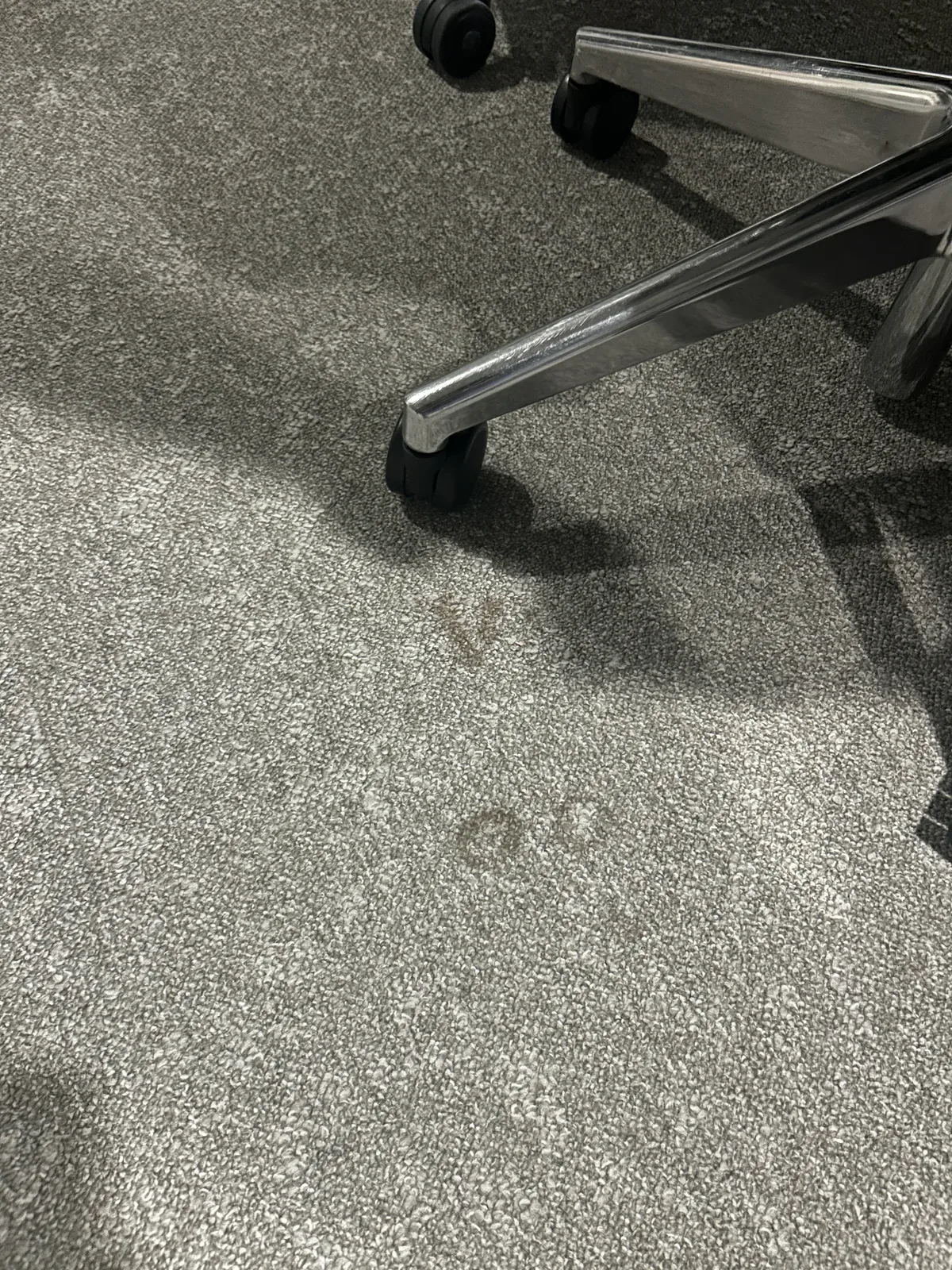
Pre-treatment
Traffic lanes and spots are pre-sprayed and left to dwell. Skipping the dwell time is the most common shortcut in this trade and it is why results vary.
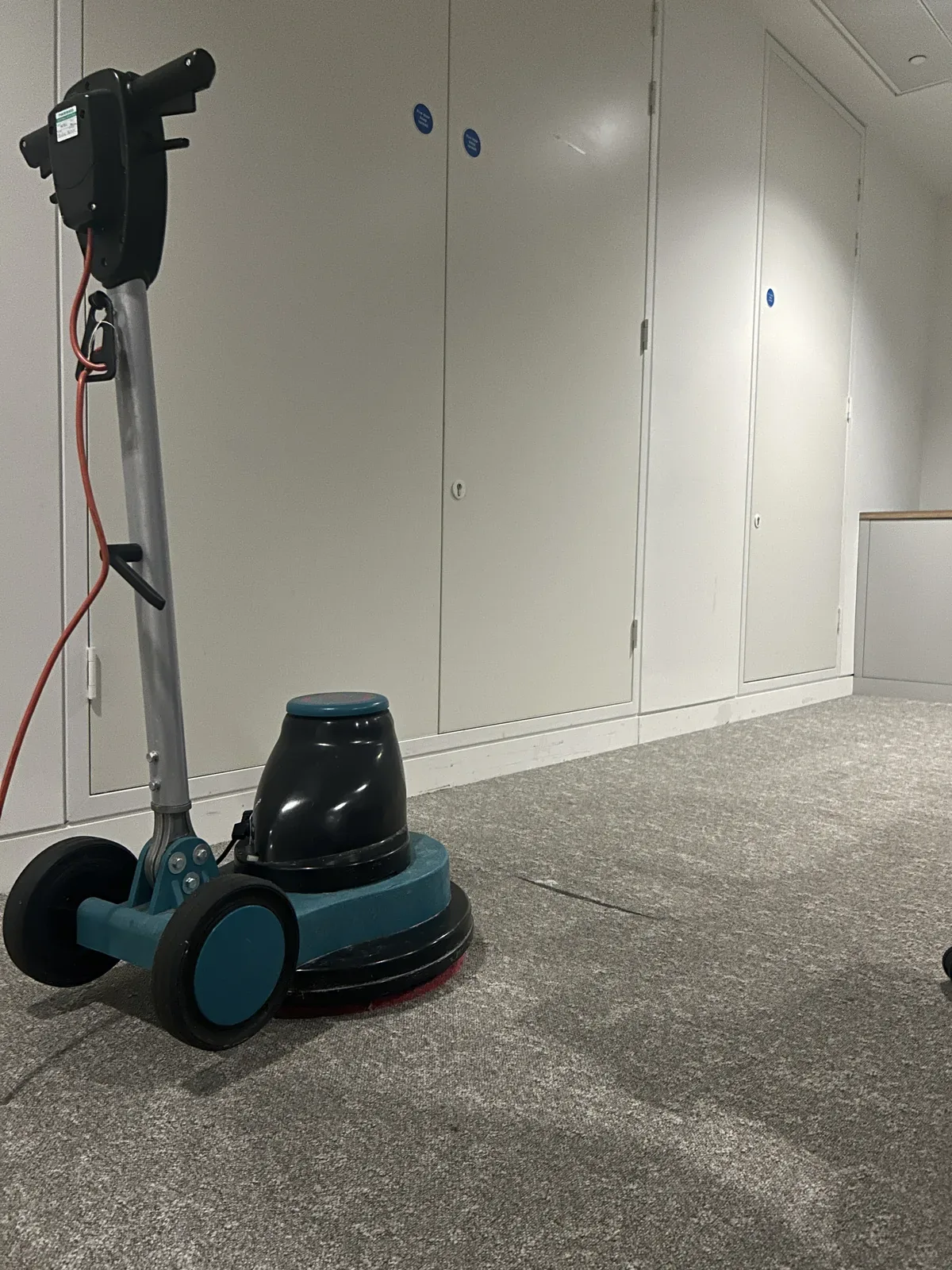
Deep cleaning
Rotary agitation works the solution through the pile so it reaches the soil sitting at the base of the fibre, rather than the top of it.
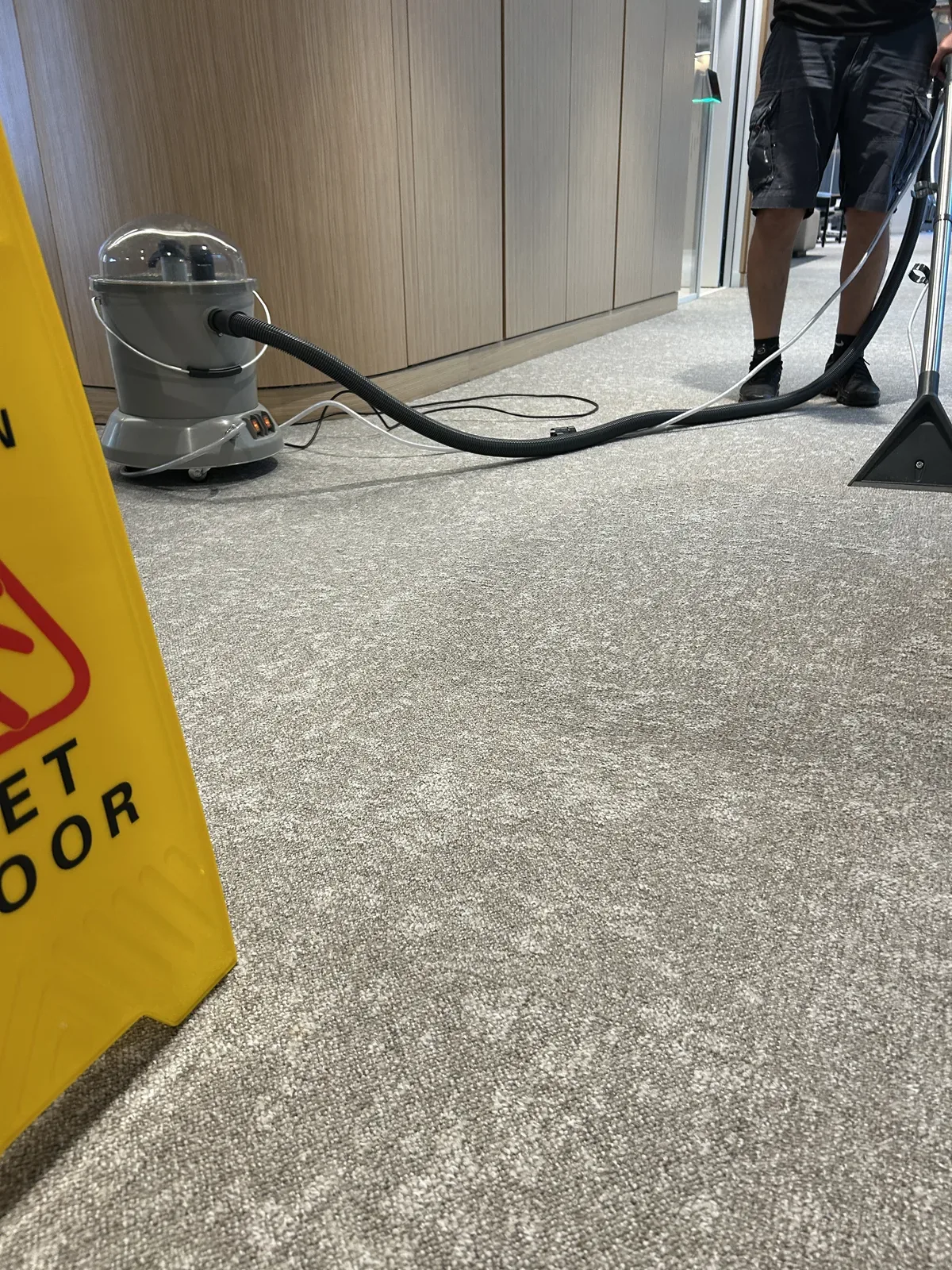
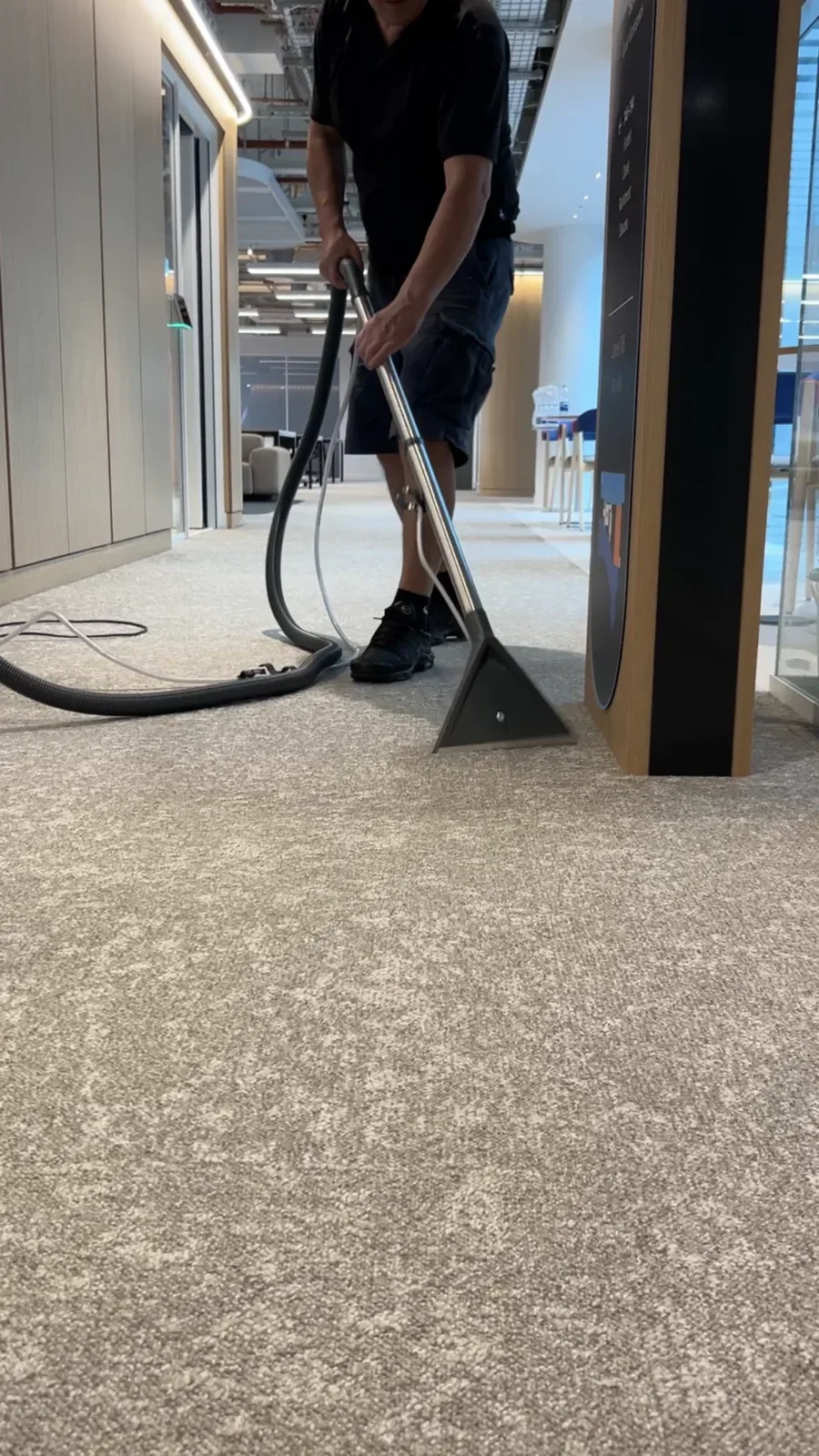
Extraction and rinse
Hot water extraction pulls the solution back out under vacuum, along with everything it has released. Then a clean-water rinse, so nothing is left behind in the pile.
Drying and final check
Air movers where they are needed, furniture back, and the floor walked again before anyone arrives. On a weekend job that means it is dry and in use for Monday.
This is what came out of the carpet.
The recovery tank after one floor. That soil was sitting at the base of the pile, and a surface shampoo would have left most of it there to wick back up as the carpet dried — which is why a shampooed floor often looks worse a week later.
It is the least attractive thing on this website and the most useful. A client never sees this stage, so it is the only real evidence of the difference between the two methods.
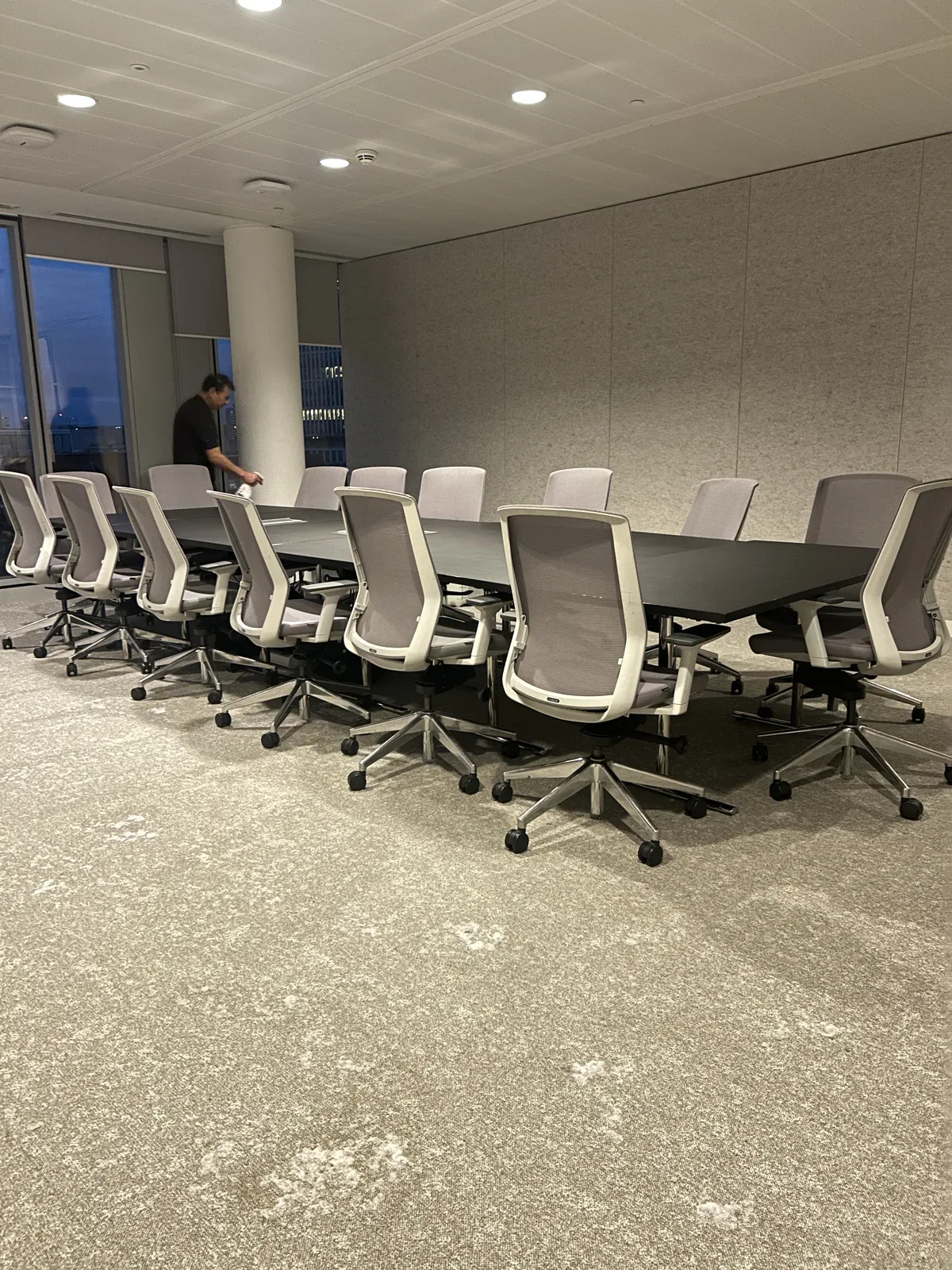
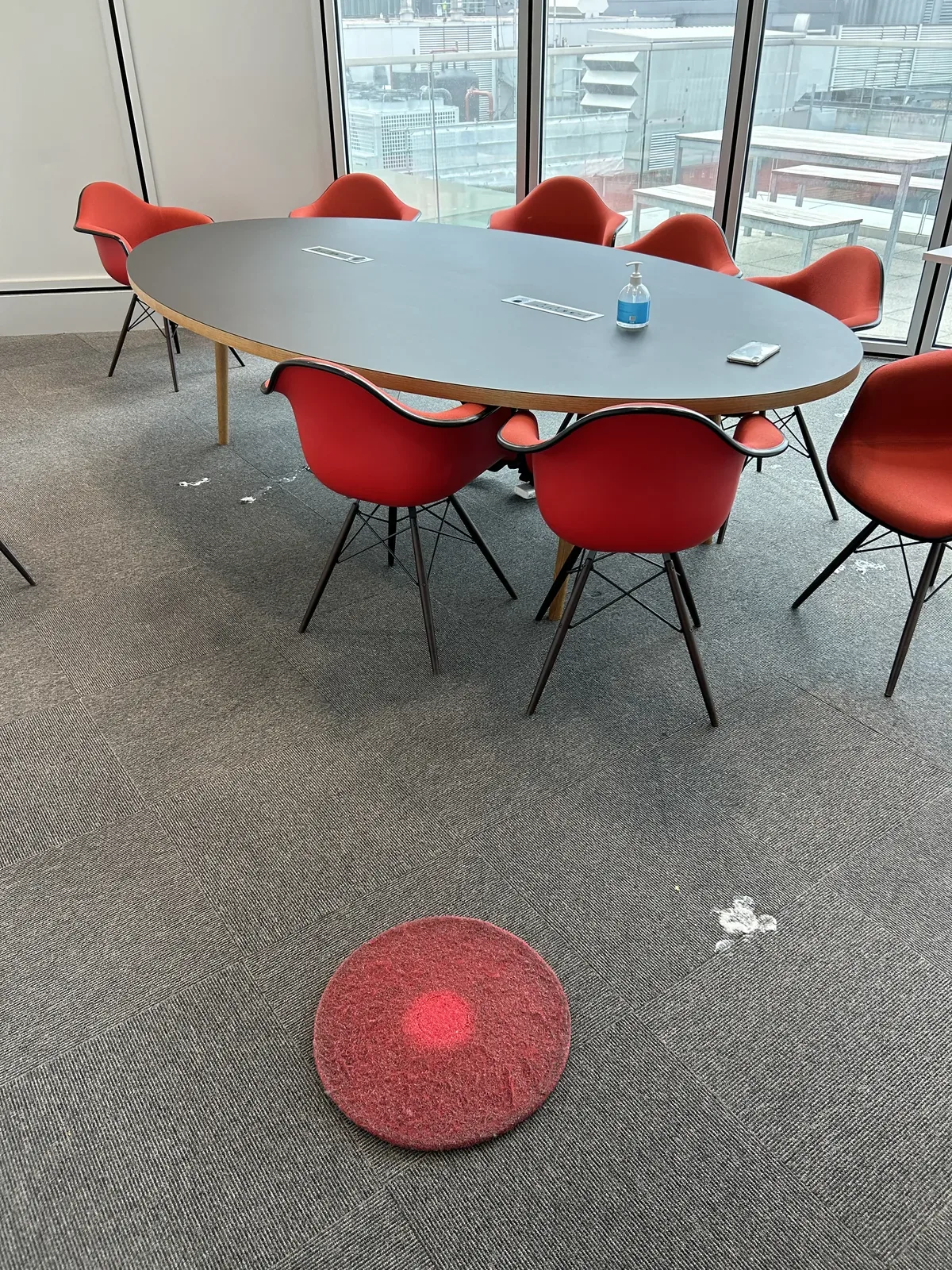
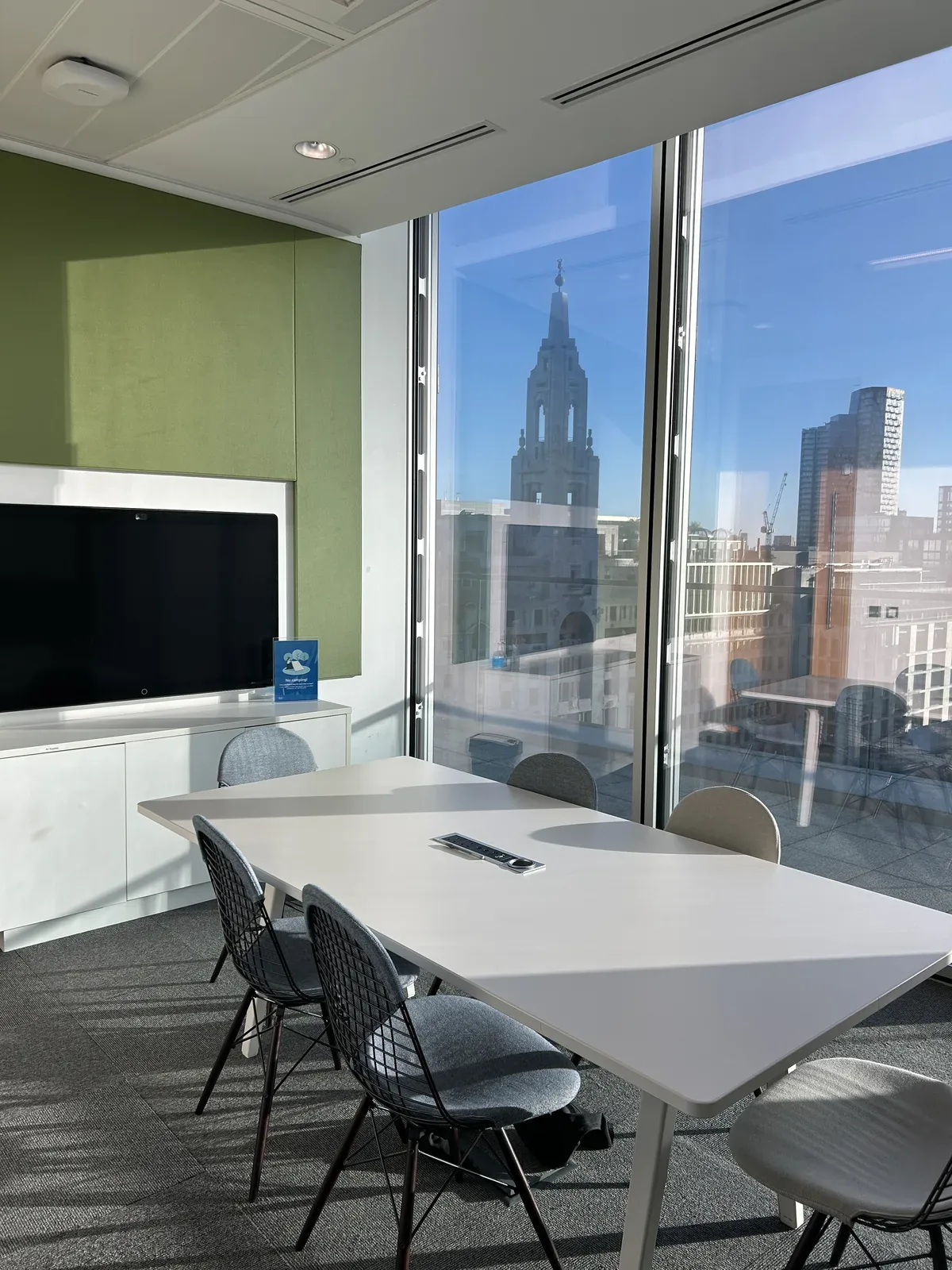
Each step shows a photograph from a real job at Moorgate or Coleman Street. Short clips of each stage are being prepared and will replace the stills here.
What extraction actually removes.
Coleman Street was a post-construction floor. Moorgate was a boardroom and meeting rooms, out of hours across a weekend, for a client who came back eight months later for a different service.
What people ask about carpet cleaning.
How long does it take to dry?
Will the stains come back?
Can you clean office chairs and soft seating?
Is this included in a contract?
How is it priced?
Start with a walk of your site.
Forty-five minutes with the person who would manage your account. A written proposal within 48 hours. Nothing to prepare.
The Infinite Cleaning Solution.