
External cleaning, where the building is judged before anyone gets inside.
Pressure washing, entrances, bin stores, terraces and external hard surfaces for offices, managed properties and commercial sites across London and Brighton.
Nobody forms an impression of a building in the lobby.
They form it at the entrance, the bin store and the bit of paving between the car and the door. Those are also the areas most likely to be nobody's job under a standard cleaning contract, which is why they drift.
Entrances and approaches
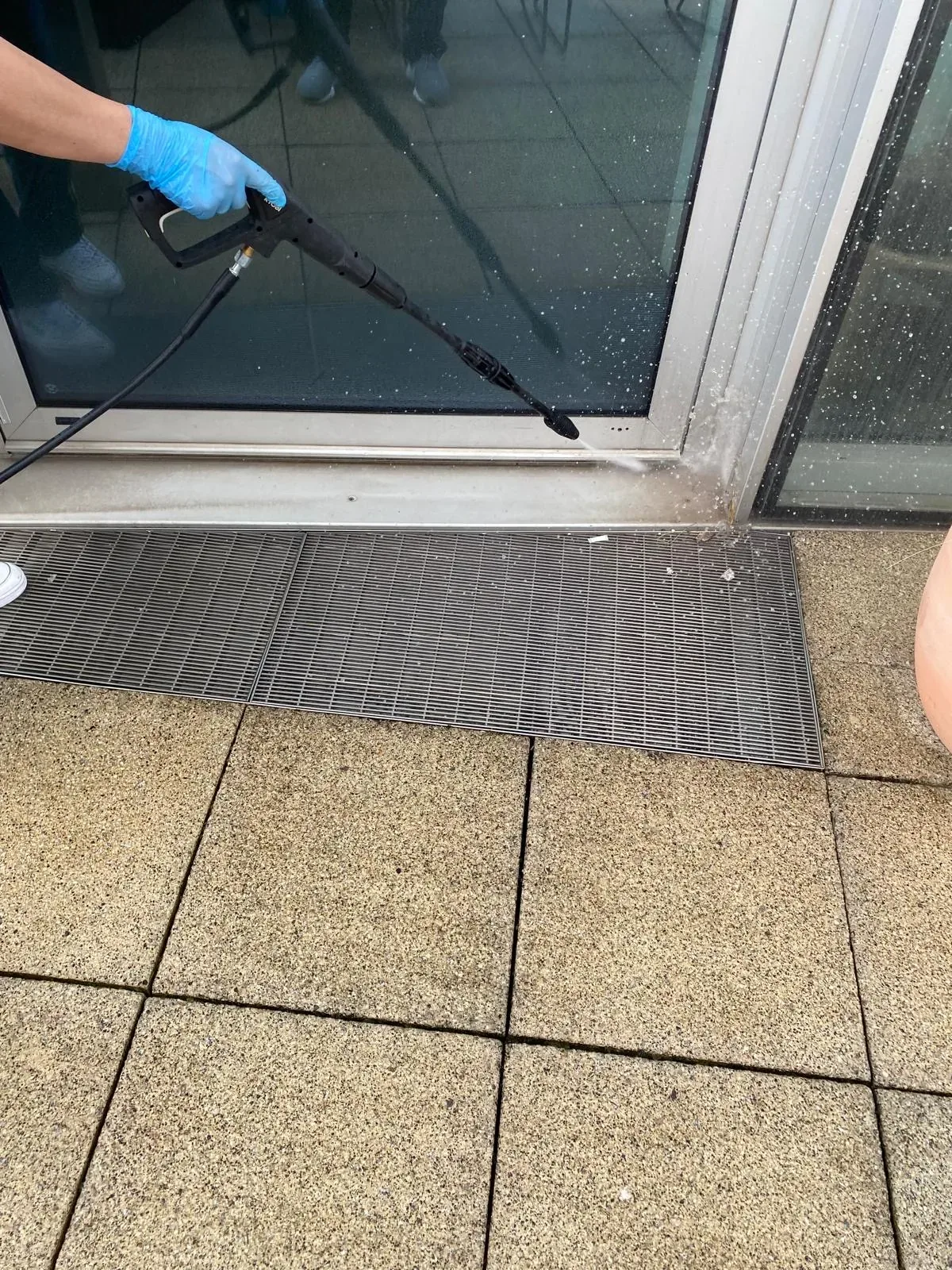
Paving, steps, handrails and glass at the point where staff and visitors arrive. Scheduled, not reactive.
Pressure washing
Hard surfaces, service yards and external stairwells, with water and run-off managed rather than pushed into the nearest drain.
Bin stores and waste areas
The area that generates the most complaints and gets the least attention. Cleaned and deodorised on a schedule.
Terraces and outdoor seating
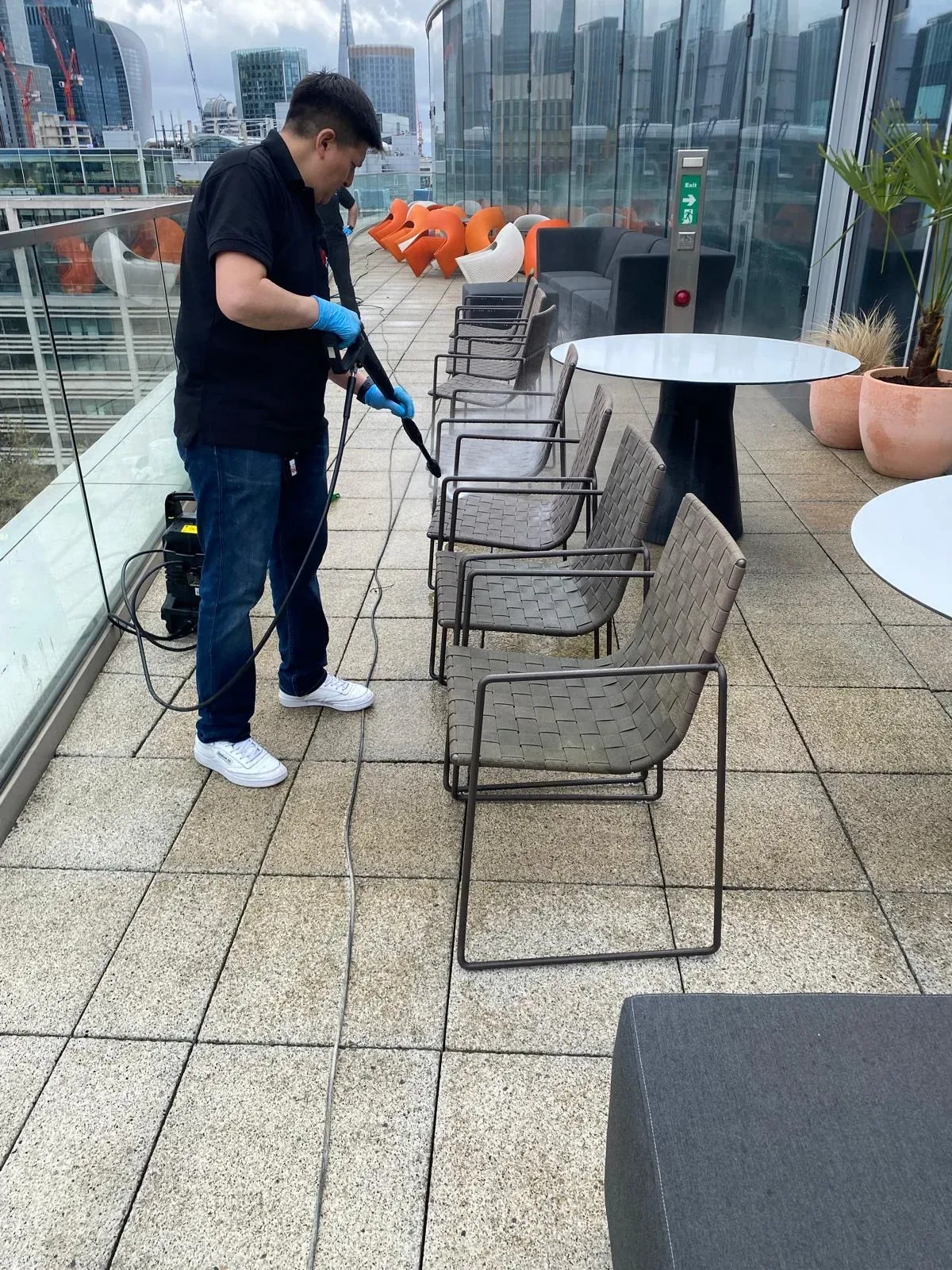
Decking, tables and soft outdoor furniture, cleaned ahead of the season rather than during it.
External work is quoted against a written scope in the same way as everything else, and it can sit inside an existing contract or run as a one-off. We do not offer grounds or garden maintenance — that service was retired, and we would rather say so than subcontract it and call it ours.
Pressure is the easy part. Water is the problem.
Anyone can point a lance at a wall. The reason external work goes wrong is what happens to everything the water carries with it.
Run-off carries whatever it lifts — silt, algae, detergent, grease from a bin store. Sent into the wrong drain it becomes somebody’s pollution incident, and on a commercial site that somebody is you.
So we agree where water goes before we start, contain it where it matters, and keep it out of surface drains that discharge to a watercourse. It is written into the method statement for your site rather than decided on the day.
Pressure is matched to the surface, not to the stain. Old paving, soft brick, painted render and composite decking all fail if you treat them like concrete, and the damage does not show until it dries.
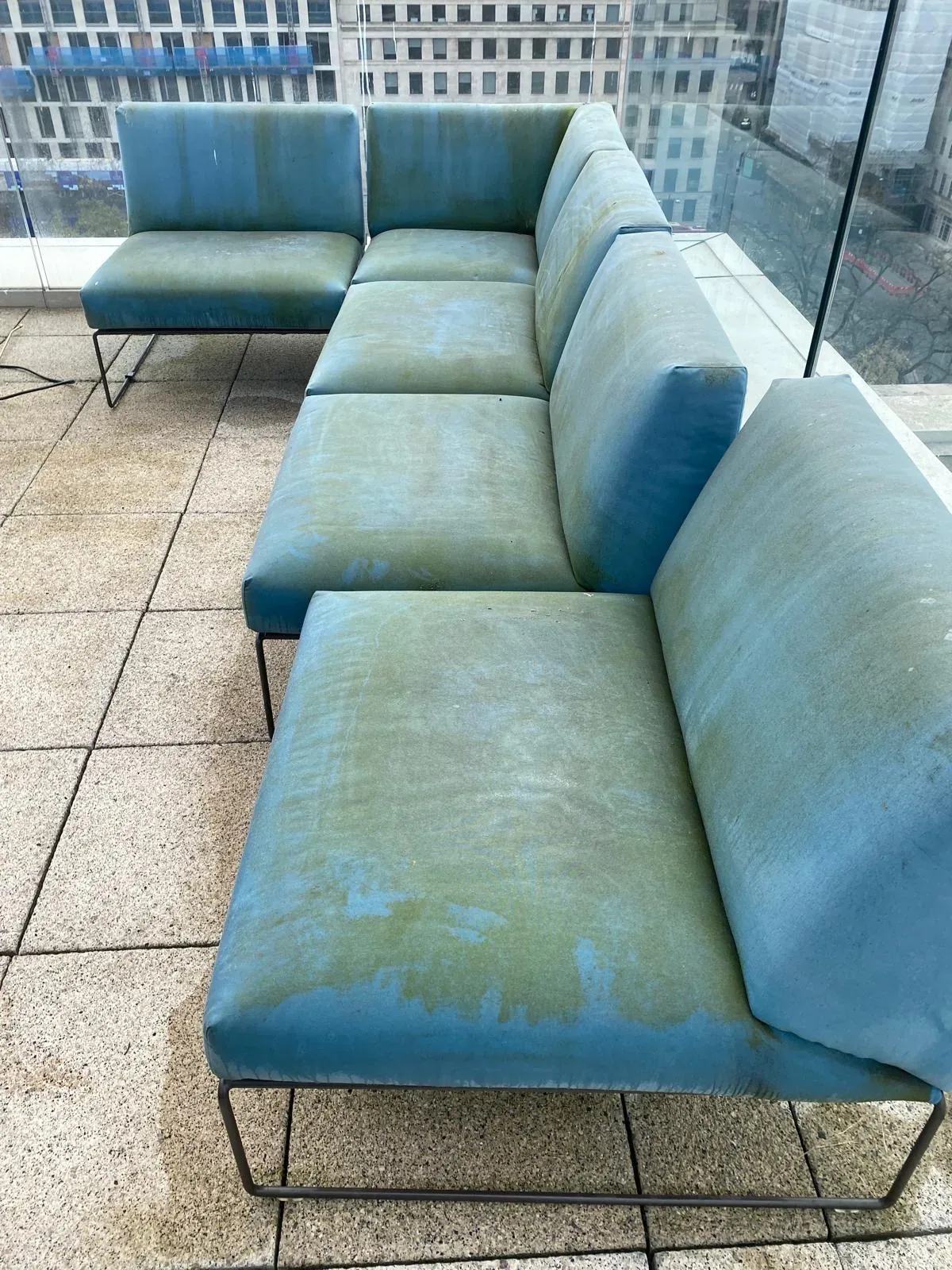
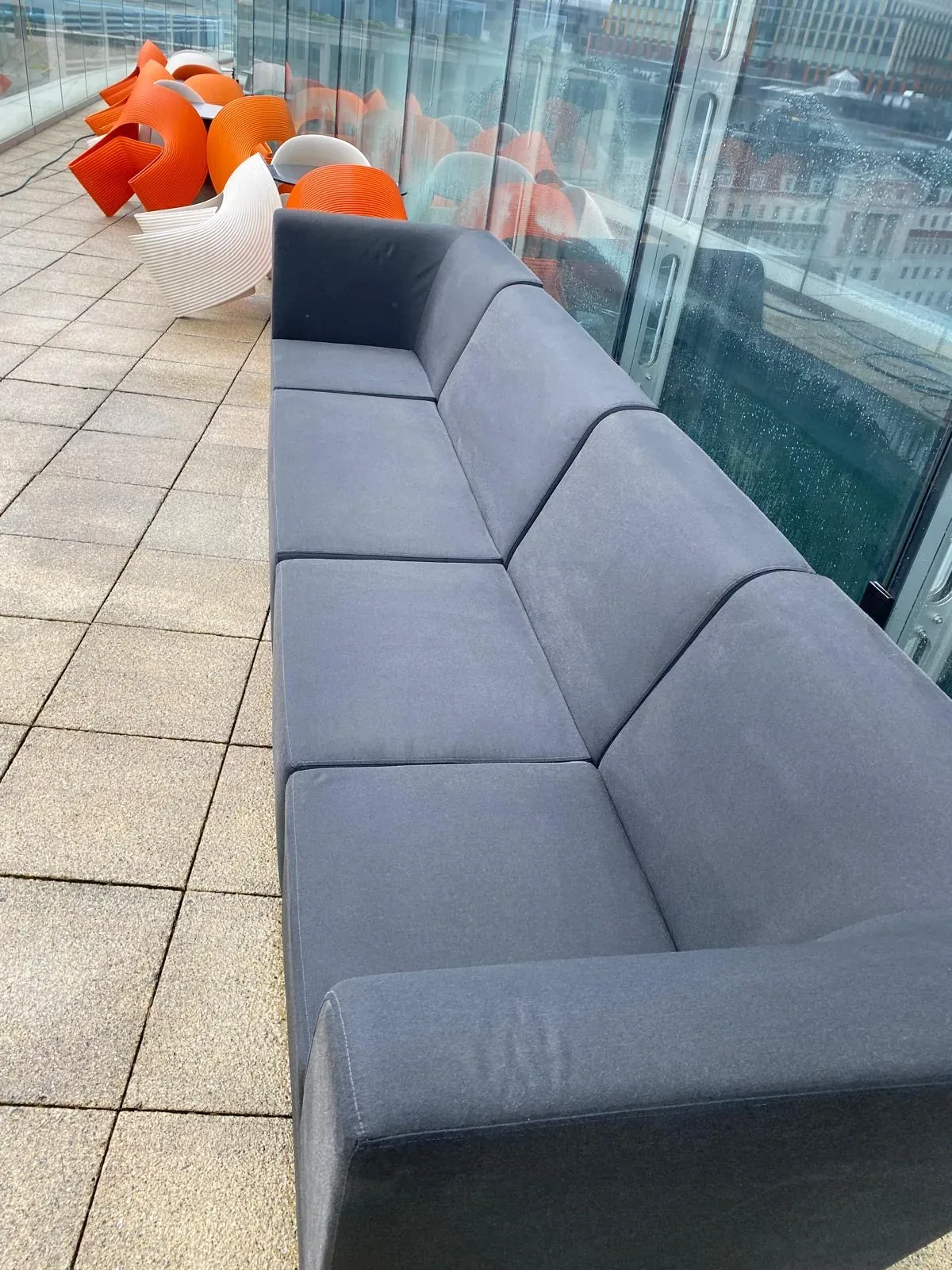
Soft outdoor furniture is cleaned rather than blasted. The Moorgate terrace below is the argument for that: the client had priced replacement, and the furniture is still in use.
External work has a season, and it is not when you notice it.
By the time a terrace looks bad enough to mention, the weather that caused it has usually passed. Scheduling it properly is most of the value.
Assess and schedule
Walk the exterior while it is at its worst and agree the scope. Booking the work now costs less than booking it in May, when everybody wants it.
Hard surfaces
Paving, steps, service yards and bin stores, before pollen and footfall arrive. Drying time is long at this point in the year, so it goes first.
Terraces and furniture
Outdoor seating cleaned ahead of the first warm week rather than during it, so the space is usable on the day people want it.
Entrances and glass
The approach and the front glass on a schedule inside the contract, because that is what a visitor forms an impression from.
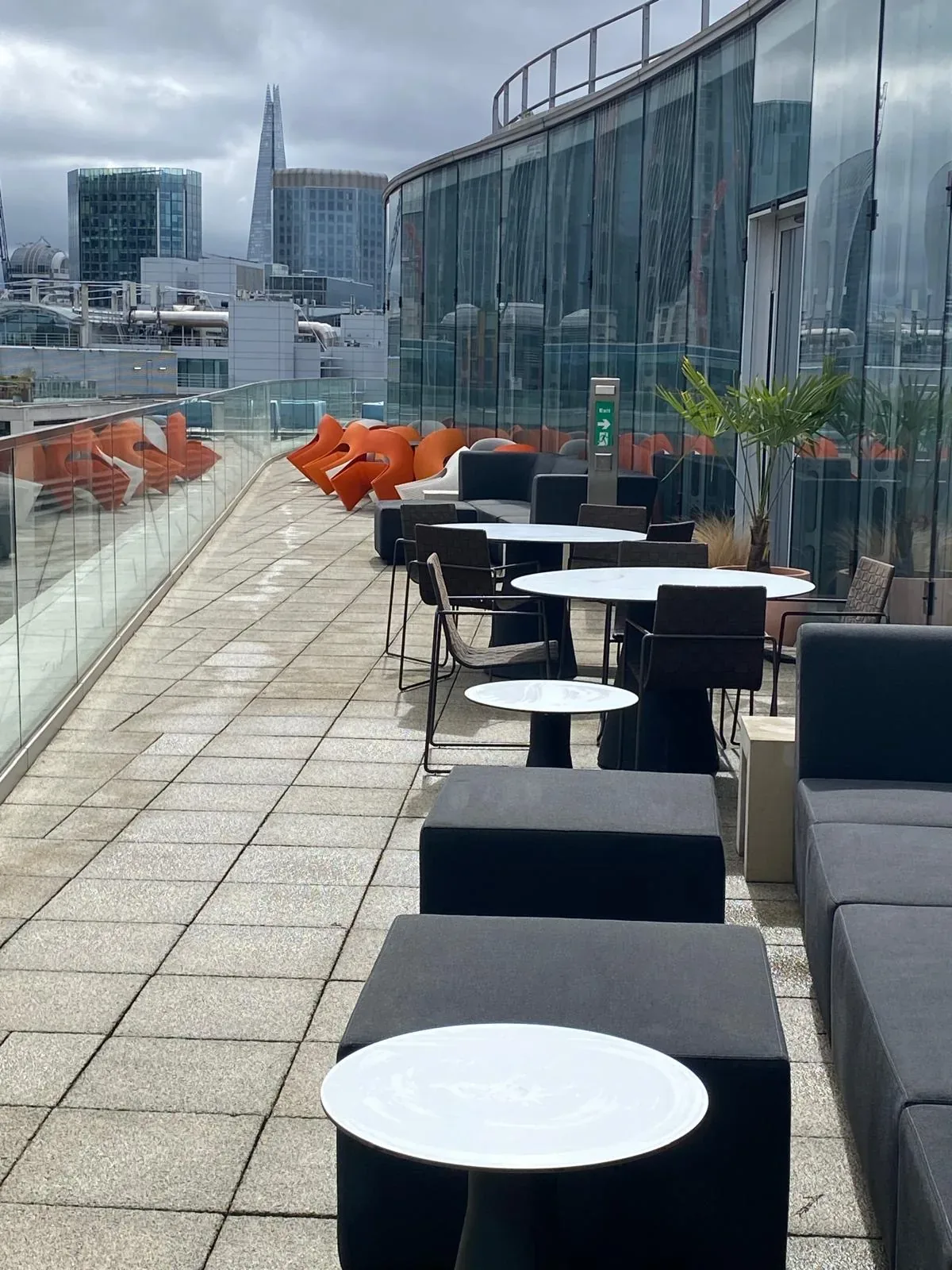
A City roof terrace, restored rather than replaced.
June 2026, three operatives. The client had already priced replacement furniture. Cleaning came in materially under that, and kept a set of furniture out of a skip.
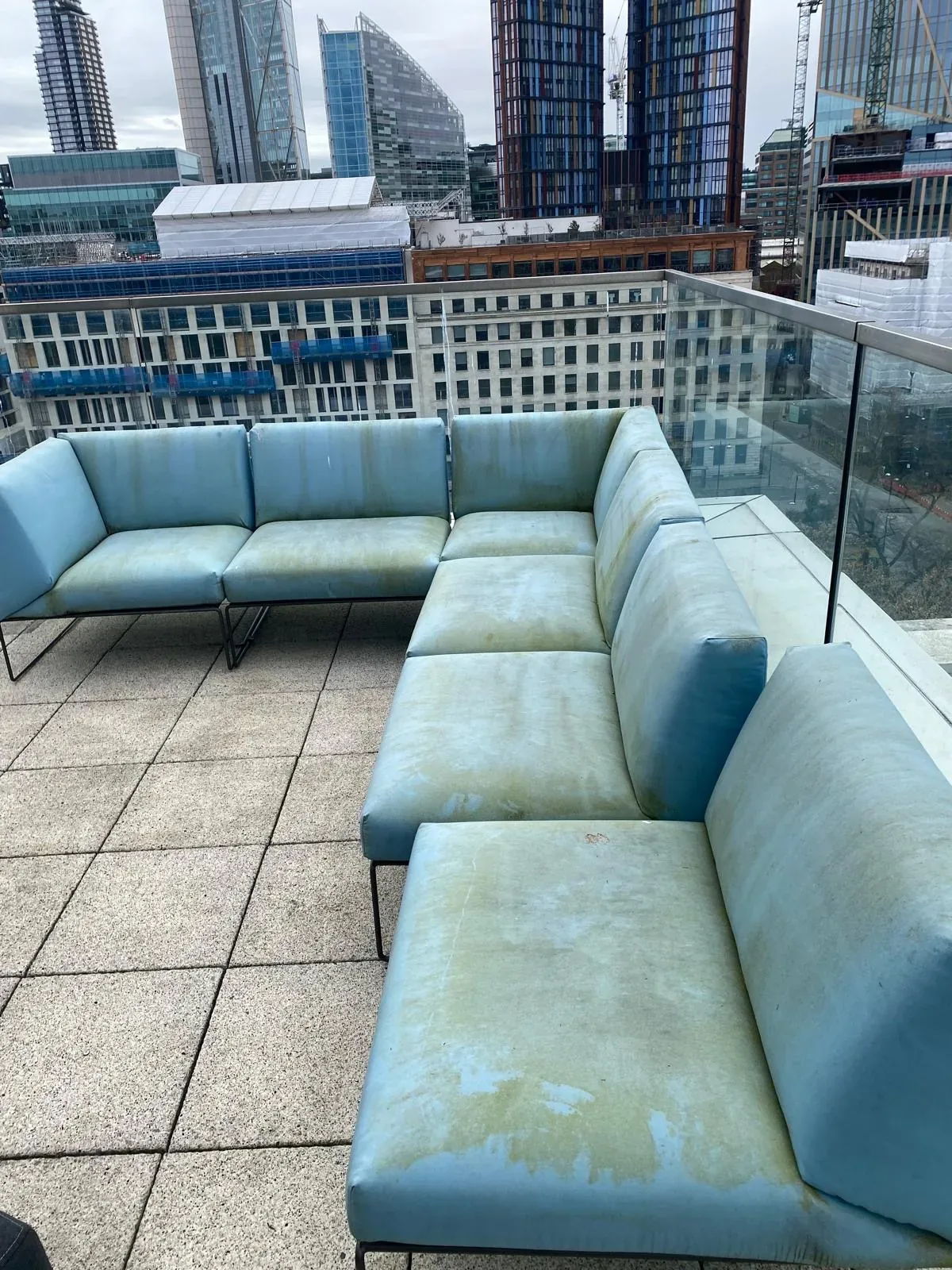
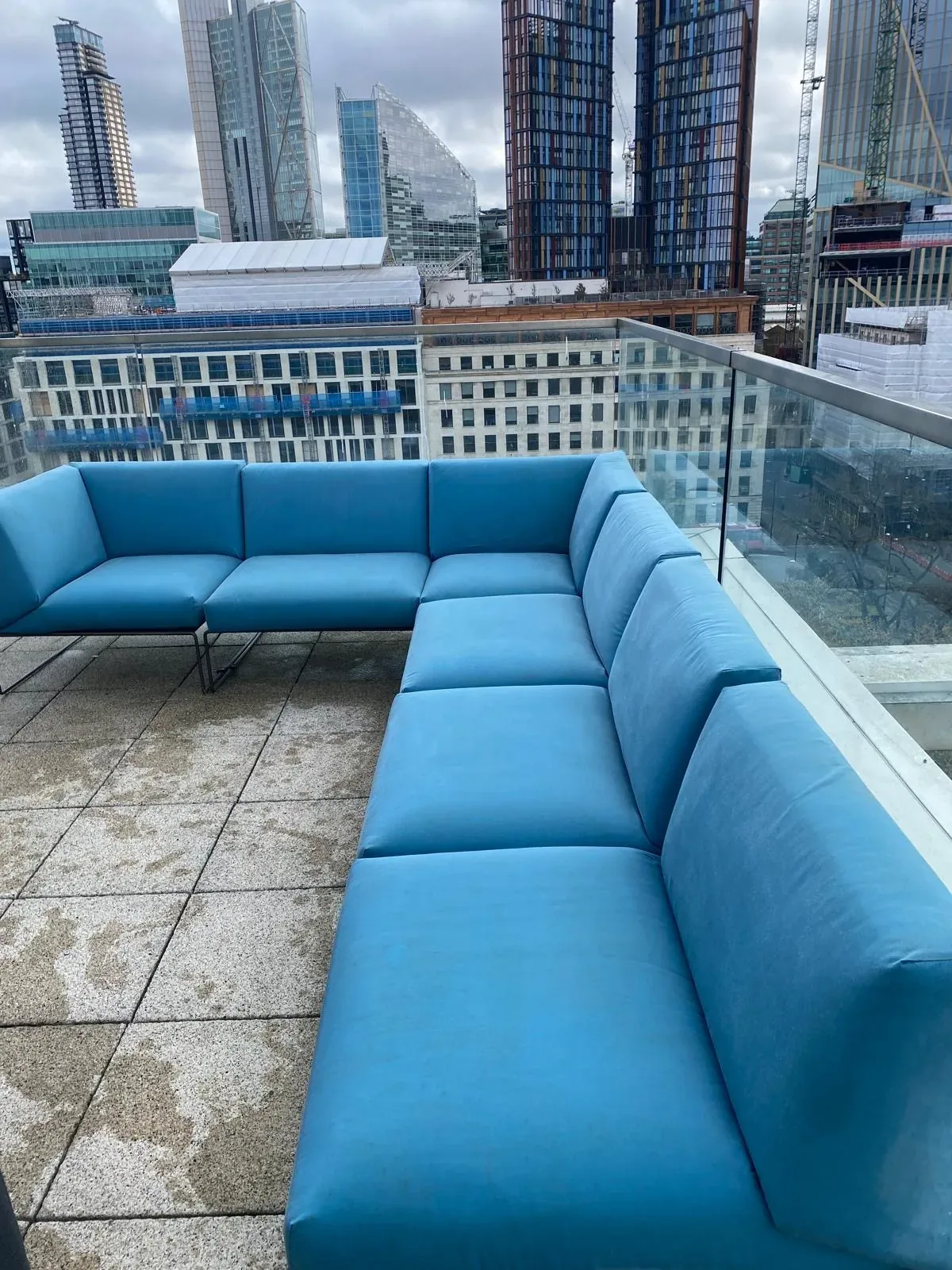 BeforeAfter
Outdoor upholstery
Algae and organic staining lifted from fabric the client assumed was finished.
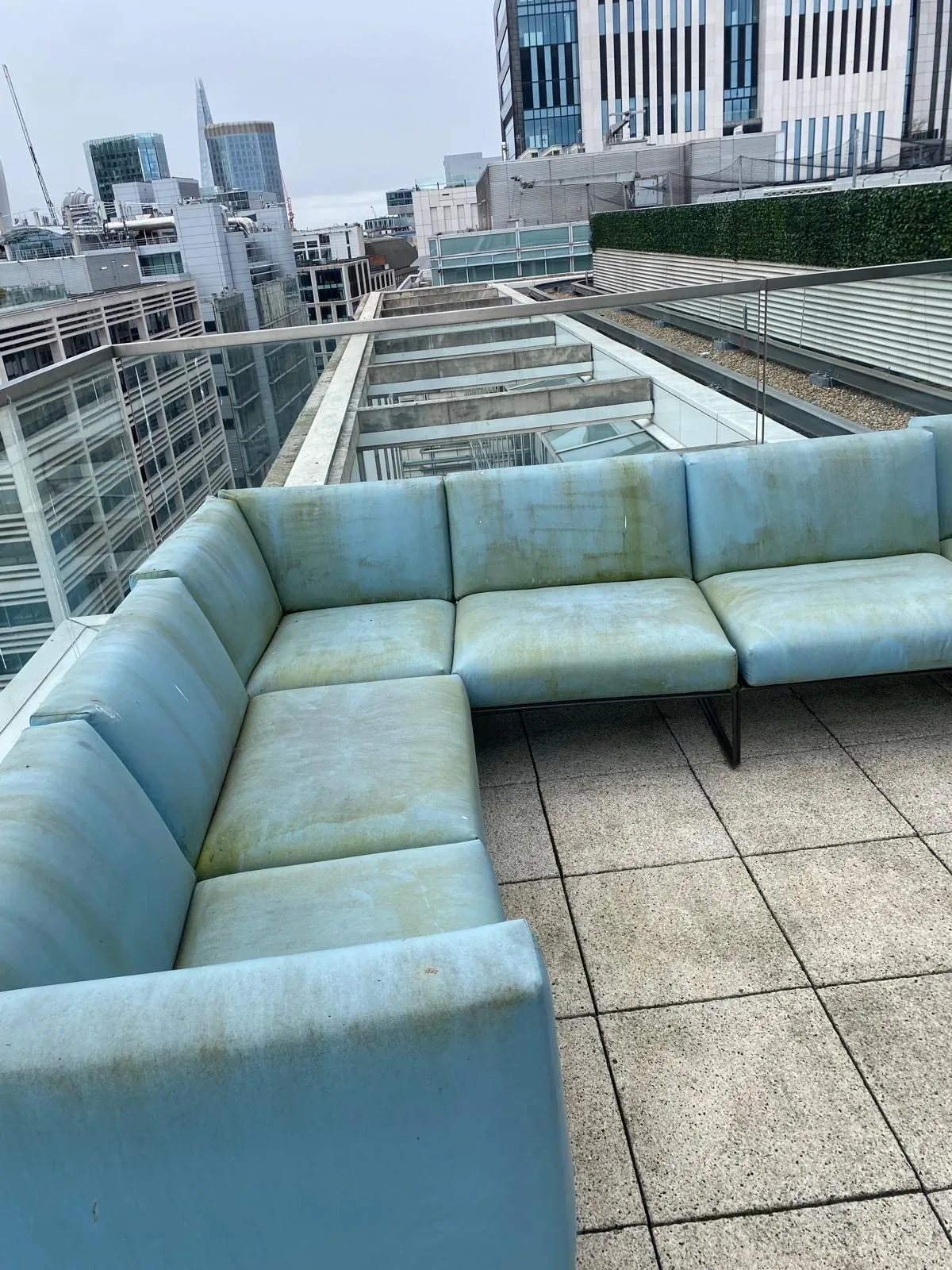
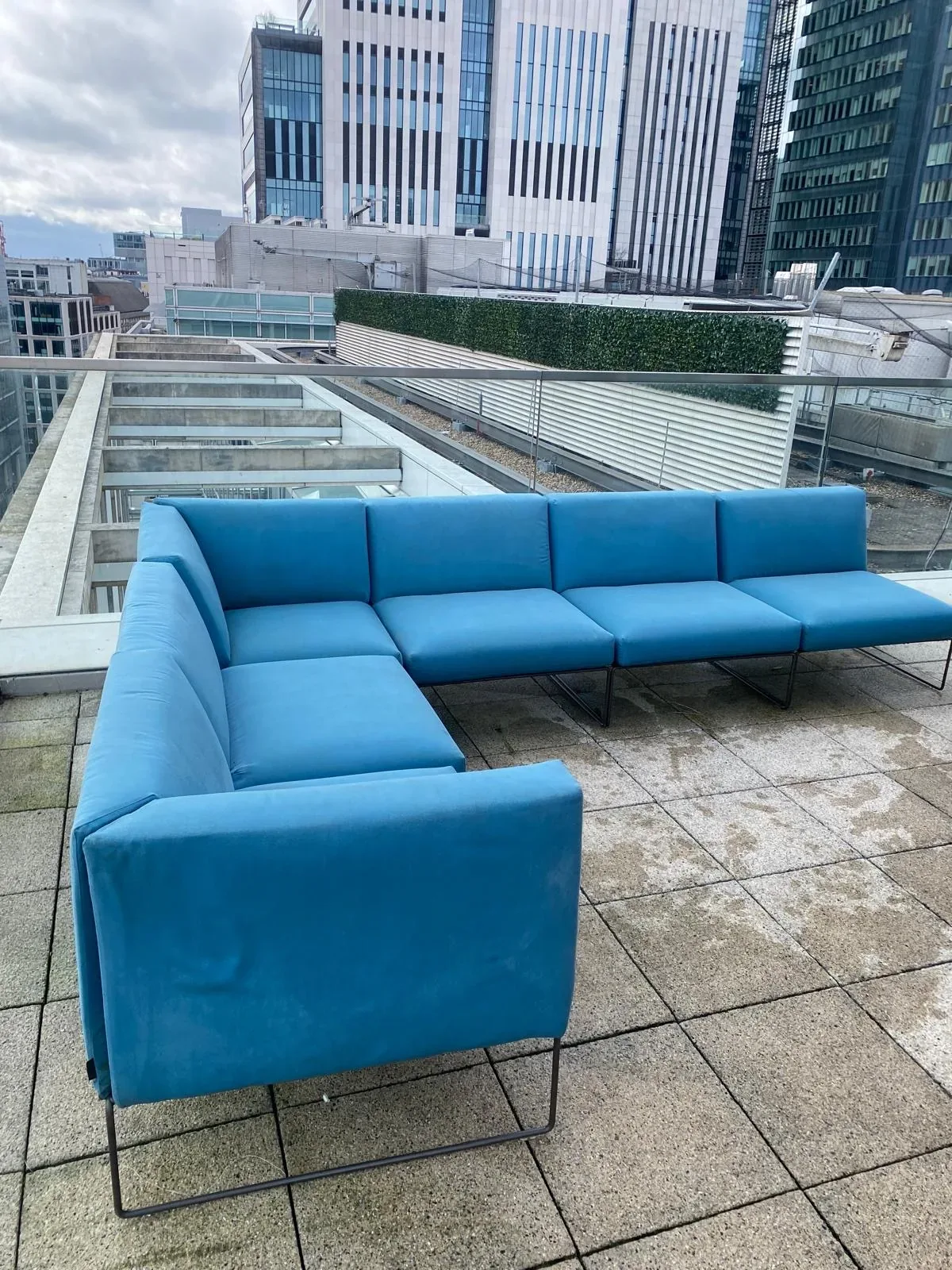 BeforeAfter
The same job, second angle
Same day, same camera position.
What people ask about external work.
Do you work out of hours?
How is it priced?
Can it sit inside our existing contract?
Do you do grounds or garden maintenance?
What about waste water?
Start with a walk of your site.
Forty-five minutes with the person who would manage your account. A written proposal within 48 hours. Nothing to prepare.
The Infinite Cleaning Solution.